














- 17 November 2026
Lawn Games at Ceylon Tea Trails: A Guide to Playing Croquet
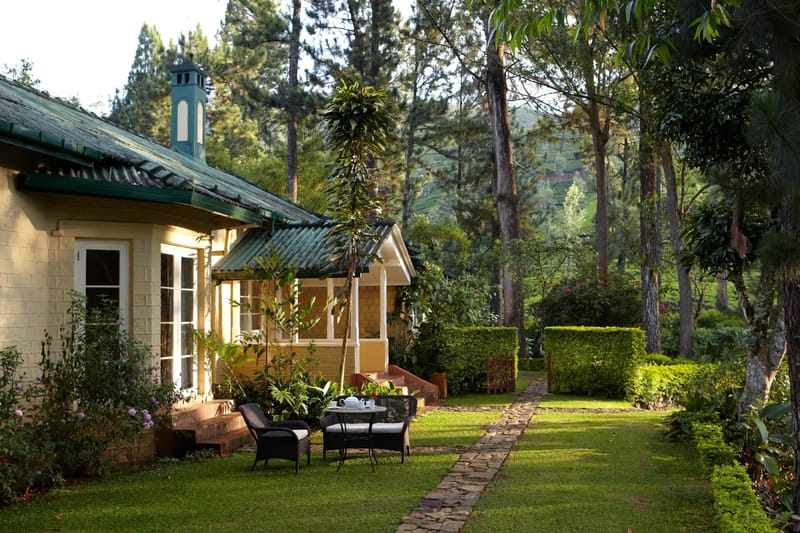
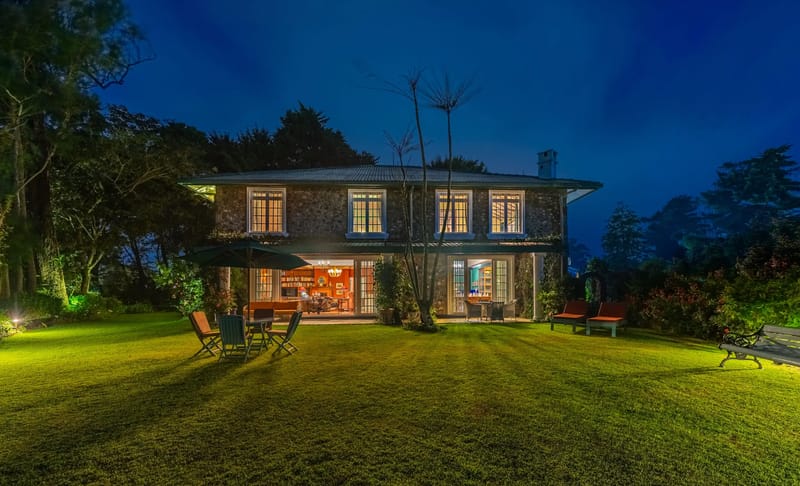
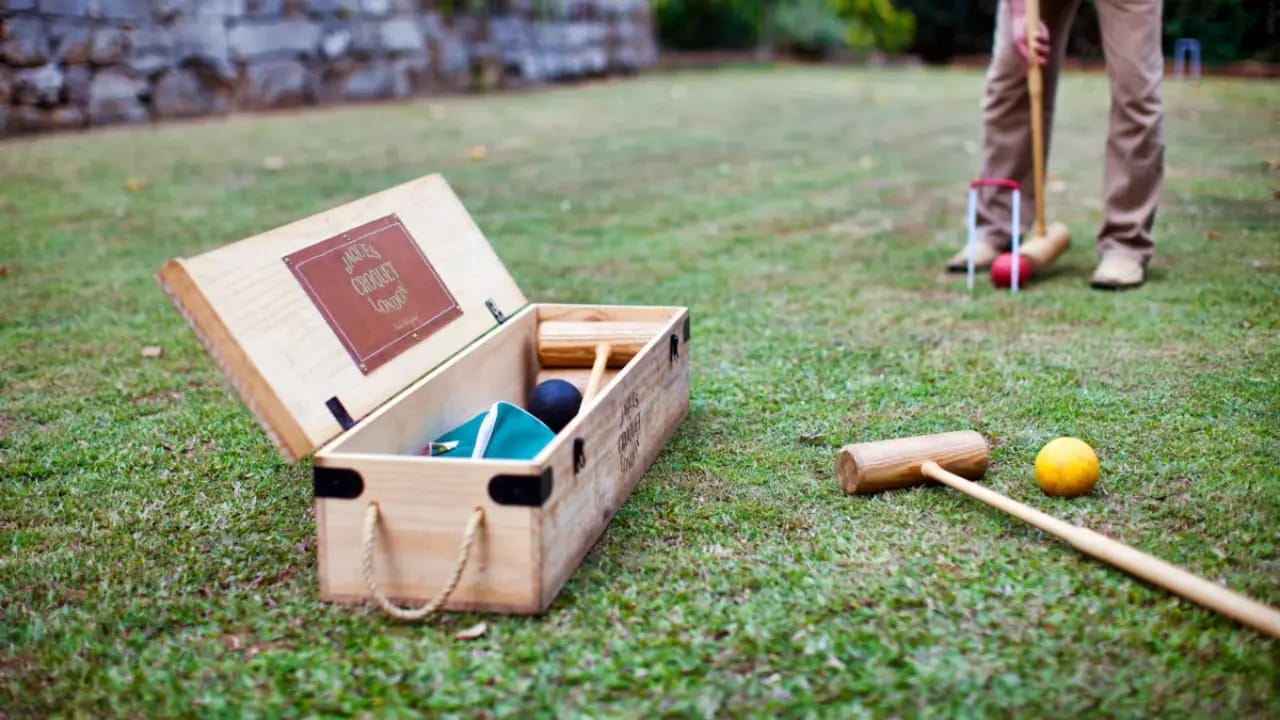
At Ceylon Tea Trails, croquet can be enjoyed on the lawns of our restored planters’ bungalows. Mallets, balls, hoops and a central peg are provided, and our team will be happy to set up the lawn for a game. All that is left is to choose your side and take your first shot.
There is something rather fitting about a game of croquet on the manicured lawns of a planter’s bungalow. A favourite pastime in gardens around the world, croquet brings together a little patience, a steady hand and a touch of friendly competition. It is easy to pick up, requires no particular level of fitness or previous experience, and offers plenty of opportunity for a clever shot or two.
Played with a mallet and coloured balls, the aim is to guide your ball through a series of six hoops in the correct order and direction, before reaching the central peg. Two sides take turns, earning points as they make their way around the lawn. What begins as a leisurely game can quickly become a test of strategy, placement and quiet cunning.
Whether you are picking up a mallet for the first time or looking to refine your technique, this guide introduces the fundamentals of Garden Croquet, following the Official Rules authorised by the World Croquet Federation and the Croquet Association of England. Start with the basics, then explore the finer points as your confidence grows.

At Ceylon Tea Trails, croquet can be enjoyed on the lawns of our restored planters’ bungalows. Mallets, balls, hoops and a central peg are provided, and our team will be happy to set up the lawn for a game. All that is left is to choose your side and take your first shot.
Croquet: The Rules
The Players and the Aim
Croquet can be played as singles (one against one) or doubles (two against two), with the same rules applying to both.
Each side plays with two balls: black and blue against red and yellow. The aim is to guide both balls through a sequence of six hoops in the correct order and direction, before striking the central peg.
Each hoop earns one point, with a further point awarded when a ball reaches the peg. The first side to complete the course with both balls wins, scoring 14 points in total.

Setting Up the Lawn
A standard Garden Croquet lawn measures 17.5 metres by 14 metres, with a marker at each corner. The central peg is positioned in the middle of the lawn, while six hoops are arranged around it.
Four hoops form a rectangle around the peg, with the remaining two placed along the centre line. All hoops are set parallel to the shorter sides of the lawn. If playing on a smaller or larger lawn, the same proportions should be maintained.
The order of play
The hoops must be completed in a set sequence:
- The blue-topped hoop marks the first hoop.
- The four outer hoops are played in a clockwise direction.
- The two central hoops follow as hoops five and six.
- The red-topped hoop marks the sixth and final hoop.
Once all six hoops have been completed, the ball must strike the central peg to finish its course.
A coin toss decides who plays first. The winner chooses whether to go first or second, while the other player chooses which pair of balls to play.
The game begins one metre inside the boundary, in front of the first hoop.
During the opening four turns, all four balls must be brought into play. For example, if red is played first, the opposing side chooses either blue or black for its opening turn, followed by yellow and the remaining ball.
Taking Your Turn
Only one player takes a shot at a time. At the beginning of each turn, the player (known as the striker) chooses which of their two balls to play. A turn normally consists of a single shot, although certain moves earn additional shots.
Earning extra shots
There are two ways to earn extra shots:
- Passing through the next hoop in sequence earns one additional shot.
- Hitting any one of the other three balls with your own earns two additional shots.
These two additional shots are known as the croquet shot and the continuation shot.
The croquet shot
After hitting another ball, the striker picks up their own ball and places it directly against the ball they have hit. They then strike their own ball, allowing both balls to move. This creates an opportunity to position the balls strategically for the next shot.
The continuation shot
Following the croquet shot, the striker takes one further shot from wherever their ball has come to rest.
Each of the other three balls may be used once to earn extra shots during a turn. Once a hoop has been scored, the striker may again earn extra shots from the other balls. Extra shots do not accumulate, and the same ball cannot be used more than once within the same sequence.
Scoring a Hoop
A hoop is scored when the entire ball has passed through the hoop’s wire in the correct direction. A ball that is still resting partly within the hoop has not yet scored its point.
When a Ball Leaves the Lawn
If a ball is struck beyond the boundary, it is simply returned to the lawn, one metre in from the point where it left. There is no penalty, and play continues as normal.
Similarly, any ball resting within one metre of the boundary at the end of a turn is moved back to the one-metre mark.

Playing the Shot
A few simple rules keep the game fair:
- Strike the ball cleanly using either flat end of the mallet.
- Do not use the side of the mallet or any other part to strike the ball.
- Never move a hoop or the central peg to make a shot easier.
- Do not place your foot on a ball or touch one with your foot.
Bringing the Game to an End
A ball completes its course once it has passed through all six hoops and struck the central peg. It then earns its peg point and is removed from the lawn.
The game usually finishes in a single turn, with the striker using a croquet shot to position both their own ball and their partner ball near the peg. The continuation shot can then be used to send the striker’s ball into the peg as well.
Alternatively, each ball can reach the peg in separate turns. The first side to complete the course with both balls wins.
Doubles and Team Play
In doubles, each partner usually takes responsibility for one ball throughout the game. For instance, one player may always play red while the other plays yellow. The choice of ball at the beginning of each turn determines which partner takes the shot.
Partners can also choose to alternate strokes, taking turns with every shot, including additional shots earned during play.
For a larger group, croquet can also be played with six players, divided into two teams of three. Each side must guide all three of its balls through the hoops and into the peg to win.
A Little Strategy Goes a Long Way
While croquet may appear leisurely, there is plenty of strategy beneath its relaxed pace. Experienced players use the other balls on the lawn, including those belonging to their opponents, to earn additional shots, improve their positioning and move through several hoops in a single turn.
This sequence of calculated shots is known as making a break, and is where patience, anticipation and a little friendly cunning come into play.
Variations to Explore
Once you are comfortable with the basics, a few variations can make the game more challenging. These can be introduced individually or combined, provided everyone agrees on the rules before play begins.
A time limit
Set an agreed finishing time. When time is called, the side with the highest number of hoop and peg points wins.
Changing the size of the lawn
The standard Garden Croquet lawn measures 17.5 by 14 metres. On a smaller or more uneven lawn, the court can be reduced, while a larger, closely cut lawn may allow for a bigger playing area. All dimensions should be adjusted proportionately.
Croquet shot restrictions
For a more challenging game, both balls must move during a croquet shot, and neither may cross the boundary. If either rule is broken, the turn ends immediately, without the continuation shot.
A longer game: 26-point Croquet
For a longer game, each ball must complete the six hoops twice, travelling in opposite directions on the second circuit, before reaching the peg. This version awards 12 hoop points and two peg points, making 26 points in total. It is the format used in many major Association Croquet championships.
An alternative starting position
Instead of beginning in front of the first hoop, players can start from either end of the lawn. This introduces a different opening and adds another layer of strategy.
Handicap play
When players have different levels of experience, the less experienced side can be awarded additional turns. These can be taken at agreed points during the game, helping to keep the competition enjoyable and balanced.

Ready to Play?
Choose your colours, find your place on the lawn and take your first shot. Whether it becomes a friendly afternoon diversion or a more spirited contest, croquet is best enjoyed in good company.
At Ceylon Tea Trails, the lawn is ready and the mallets are waiting.
- Share this post:



Extended Stay Savings
Extend your stay for 6+ nights at Cape Weligama, save more and enjoy the holiday of a lifetime.


